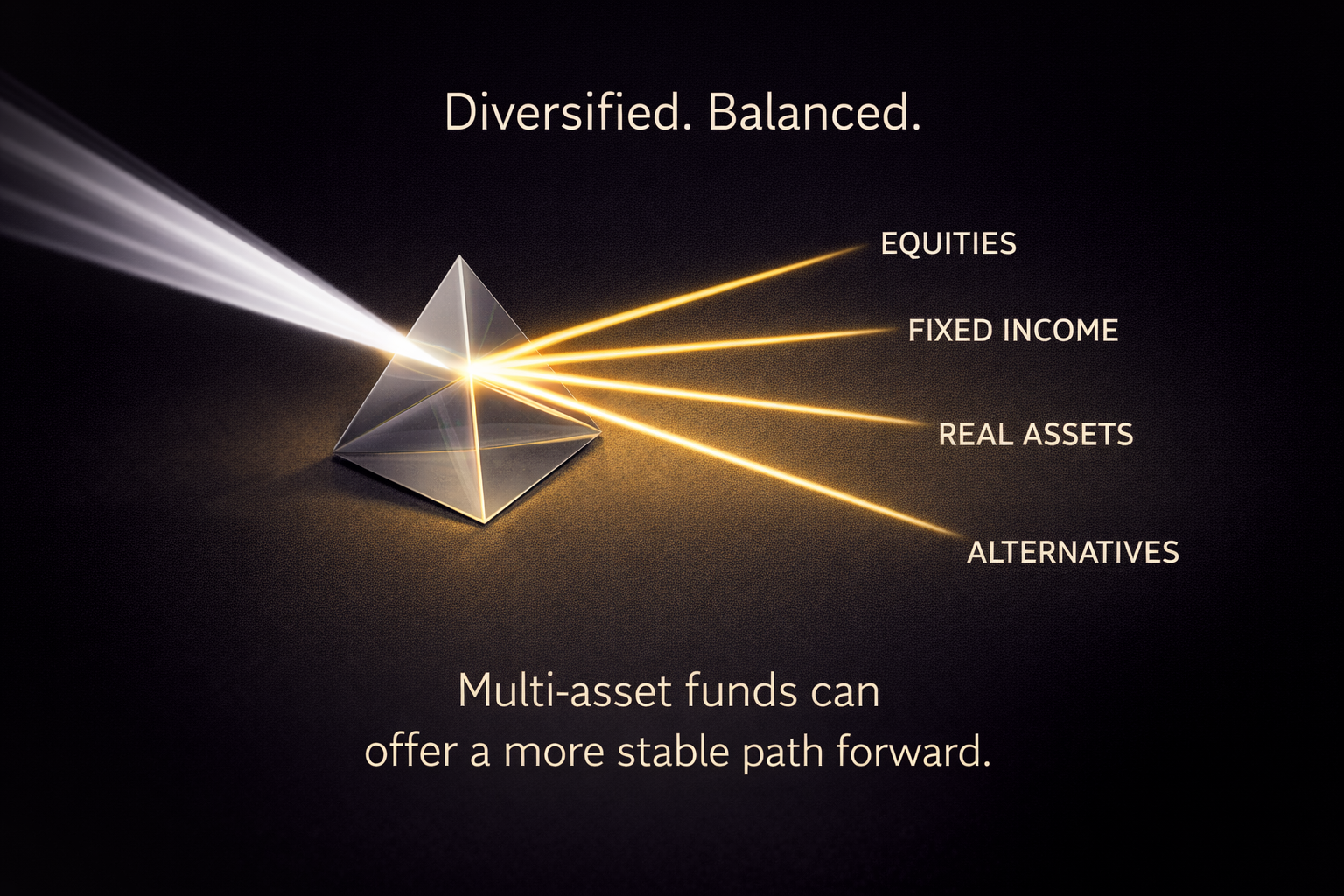
Asset allocation is the very foundation of investing, and the very first step towards creating a portfolio. It means investing in different asset classes, such as equity, debt, gold, silver or commodities.
Asset allocation is an anchor that provides stability to a portfolio. When all the money is concentrated only in one asset class, and asset allocation is ignored, the portfolio is unable to weather market downturns or the impact of sudden and severe geopolitical events. Different asset class responds differently to market movements, and together they balance each other in a portfolio. When one asset class drops in value, the other may hold steady or even rise. For example, if the equity market is falling or very volatile, but gold and silver are rising, then an investor with allocation to all these asset classes will not see their portfolio experience a lot of turbulence.
One’s asset allocation is based on numerous factors such as age, predictability of income, cash outflow, what their savings goals are, and how comfortable they are with volatility. Mutual funds are excellent vehicles to enable asset allocation. But if you find it confusing to invest in different funds, use an asset allocation fund.
- Multi-asset allocation funds are also known as multi-asset funds.
- As per SEBI regulations, such a fund must have an allocation to a minimum of 3 asset categories, and a minimum 10% per cent allocation to each category. The rest is as per the discretion of the fund house.
- Equity and Debt are the standard asset classes, and the minimum allocation to each is 10%.
- Based on valuations and earnings growth, the fund house will take the call as to how much the equity exposure should be. Some funds may tilt towards large-cap stocks, while others may tilt towards mid-cap stocks. So the funds could be very different from each other.
- Other than equity and debt, other asset classes could be gold, silver, commodities, global equity, Real Estate Investment Trusts (REITs) and Infrastructure Investment Trusts (InvITs).
If an investor had to do this on their own, they would need to constantly decide when to reduce exposure to one particular asset class, and increase exposure to another. Also, they would be taxed when doing so. This gets taken care of in a mutual fund as experts make the call, and there is no tax levied for buying/selling.