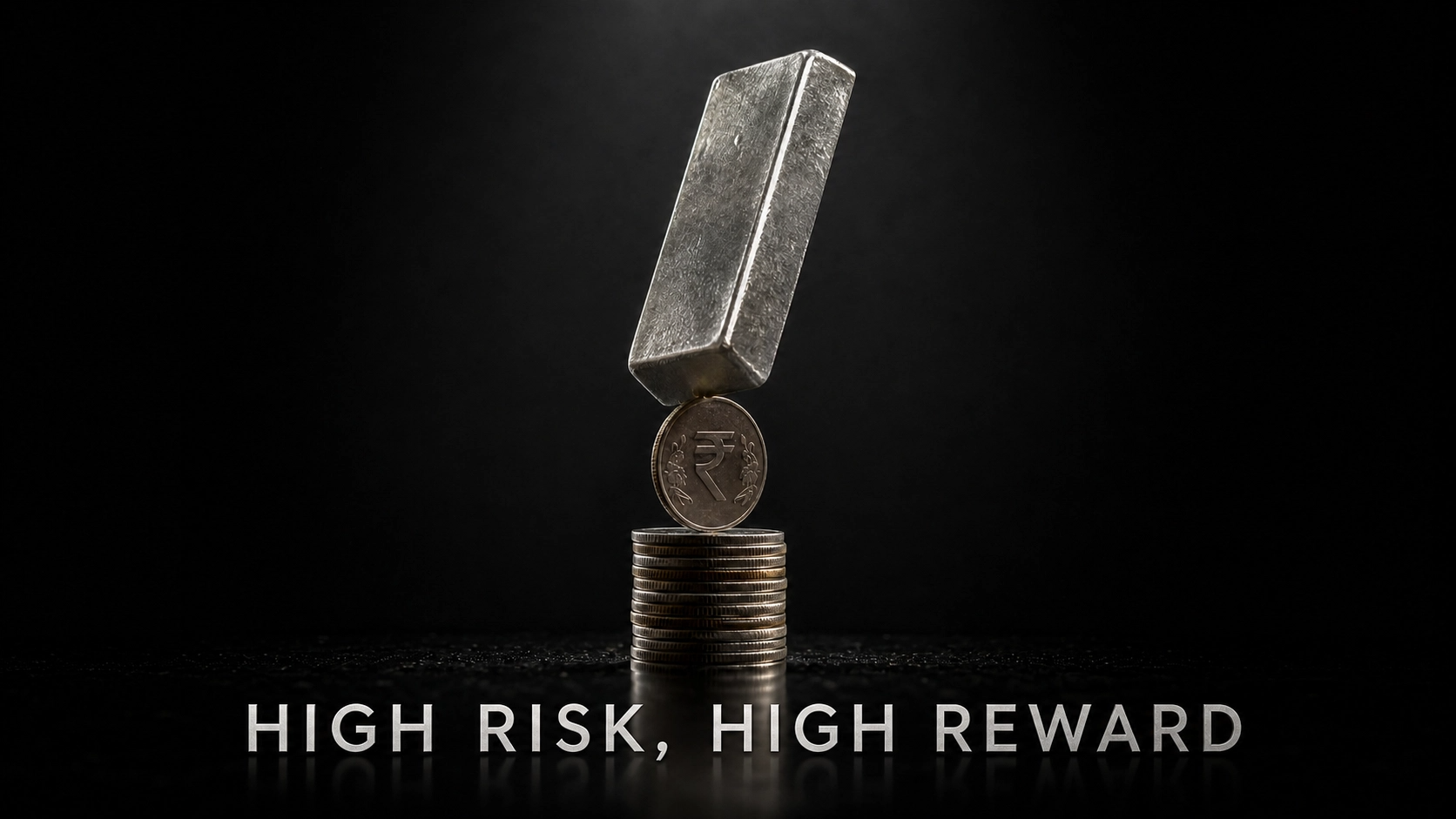
"If Gold is the Steady Anchor of an Investment Portfolio, Silver is undoubtedly its High-Octane Engine."
In the dynamic World of Commodities, Silver has carved out a reputation as a metal of extremes. The year 2025 witnessed an astonishing surge in silver prices, with gains reported as high as 148%.
However, 2026 has already demonstrated Silver's significant rally followed by a sharp 26% flash crash on January 30th, bringing it's price in India to around 2.4 lakh/kg. This dramatic price action underscores Silver's dual nature: a high-risk, high-reward asset that demands careful consideration from investors.
Silver's price movements are influenced by a complex interplay of factors, making it significantly more volatile than its yellow counterpart, gold. Its smaller market size means that relatively minor shifts in supply or demand can trigger substantial price swings.
Key Drivers include:
1) Industrial Demand :
A significant portion of Silver's demand comes from industrial applications, particularly in rapidly growing sectors such as photovoltaic (PV) solar cells, 5G Technology, and Electric Vehicles (EVs). Economic slowdowns or technological shifts can directly impact this demand, leading to price fluctuations.
2) Investment Demand :
Like Gold, Silver serve as a safe-haven asset during times of economic uncertainity or geopolitical instability. Geopolitical tensions, such as those observed between Iran, US, and Israel in early 2026, can spur investment demand, driving prices upward.
3) Speculative Trading :
Silver's reputation for dramatic price movements attracts speculative trading, which can amplify volatility. Large institutional trades or market sentiment shifts can lead to rapid price changes.
This intense volatility often leads to rapid shifts in retail sentiment. For example, despite the massive overall gains, Silver ETFs actually recorded their third consecutive month of net outflows in April 2026, losing ₹126 crore as investors rushed to lock in their profits and avoid further price swings.
Because of these violent market movements, experts strongly advise against heavy, lump-sum deployments into silver. The optimal strategic allocation for silver should be treated strictly as a tactical satellite position, capped firmly between 5% and 15% of your total net worth.
Strategies for Navigating Silver Investments -
For Indian investors looking to incorporate silver into their portfolios, balanced approach is crucial. Financial experts often suggest a strategy of "Gold for Stability, Silver for Growth". This implies using gold as a foundational safe-haven asset and Silver as a tactical allocation for growth potential.
1) Consider ETFs and Digital Silver :
For Ease of Investment and Liquidity, investors can consider Silver Exchange Traded Fund (ETFs) or Digital Silver Platforms, which offer exposure to the metal without the complexities of physical storage.
2) Stay Informed :
Keeping abreast of global economic trends, industrial demand forecasts, and geopolitical developements is essential for making informed decisions about Silver investments.
At Yellowrock, our research shows that utilizing disciplined Systematic Investment Plans (SIPs) in Silver ETFs is the smartest way to average your costs through the inevitable price drops or drawdowns. This allows you to capture the metal's massive industrial upside without exposing your core wealth to ruinous volatility.
This blog is for informational purposes only and does not constitute financial advice. Please consult a SEBI-registered investment advisor before making investment decisions.